
WILD WILD WEST
On blindly following book rules in astrology, the erroneous concept of radicality, and events shown not by aspects but in another way — illustrated by a question chart about increasing a credit limit.
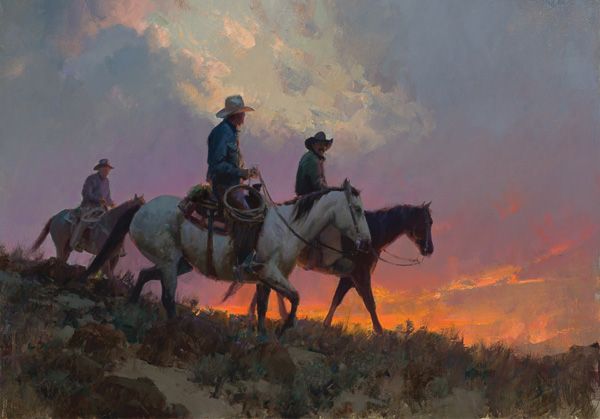

Wild Wild West
In life, you always have to be a little bit of a rebel. Balance on the edge. Stand close to the brink. Go against the mainstream. And look up, even with your head bowed down. Only this way is it possible to achieve the impossible.
We have always enjoyed stepping beyond the permitted boundaries of the predictive art — boundaries prescribed by someone in the past or present solely because they have been elevated to the rank of Alpha and Omega of our field. Of course, we are talking about the traditional direction, with its numerous ‘Ptolemies’ of our day. What a life! Claudius, who has as much relation to astrology as Dua Lipa has to space exploration, still exerts his pernicious influence on the minds of numerous astrologers, even though in his otherwise quite productive life he never made a single prediction. Unlike Valens, who left behind hundreds of real examples, Dorotheus with his horoscopes, or Lilly with his numerous question charts. Moreover, each of them often surpassed established norms and discovered something new. Yet we are categorically urged to blindly adhere to the past simply because it has endured.
All this somehow resembles the eternal drama of Salieri and Mozart. The academic against the genius, the system against what does not fit into it, the old against the new, theory against practice. Where would this world be if it had forever remained locked in its rules and prescriptions? Probably we would still be dying of boredom from dry, trodden thoughts and strict, logically closed words.
However, not everything new is necessarily true. Often it is merely a form of distortion, devoid of essence — idea and content. We see this in modern astrology, where it is not so much the genius of thought that has paved its way, but rather a lack of knowledge that has found a wide field for its activity — therapy for those who fear reality and prefer illusions to it. Escapism. Therefore, of course, the foundations must always remain foundations. When the foundations are trampled and substituted, and the purpose distorted, nocturnal creatures emerge into the light: astro-psychology, karmic astrology, Uranian astrology, modern-classical astrology, and other directions that have nothing in common either with true astrology or with its purpose and mission. Empty sounds of general words offering false hopes and vague options. And therefore now, more than ever before, adherents of the predictive art must be lonely voices in the desert of the Wild West — this allegory of a world of aggressive ignorance. For only in this way can a particle of truth preserve itself in the dust of delusions and lies. In the struggle for the future — like a drop that changes perception.
However, we are not so alone. Though not as numerous as we would like. Who knows, perhaps that is for the best? In the end, what becomes the property of the masses almost always loses the light of truth and is distorted beyond recognition. Sometimes even to complete semantic opposition. Therefore, a drop of truth is always better than an ocean of lies.
We never cease to be amazed by the variety of ways in which answers can be shown in the field of horary astrology. When it seems that you have learned everything there is to know in this predictive sphere, a new question brings a new discovery. It resembles an astonishing journey. Into life itself, into the future, into the unknown. And what is most beautiful of all, it never represents some set of general templates, phrases, or meanings. Always a concrete, time-verified result that also agrees with the logic of the predictive art. It is precisely this incredible diversity — tangible and real — that makes our field not merely a system of knowledge, but an art breathing in unison with life itself. For what is life if not an eternally changing panorama of pictures painted by the hand of the Most High? Celestial art, the reflection of which we see in the planets and stars.

Oh, these ancient texts… A small digression is necessary for lovers of rules. They always must begin the consideration of a chart with checking its radicality. In simple terms — with determining the chart’s suitability for delivering judgment upon it. Comparing the hour ruler with the Ascendant — its ruler, the triplicity planets, and the humoral nature of the Ascendant ruler. If it matches — we work. If not — we refuse. Everything is simple. The trouble is only that half the charts will be non-radical. That means half of those who come for help will not receive it… Fortunately, we never do this. Never. For many years now. If an astrologer cannot distinguish the querent’s sincere interest in the question, then what is he capable of at all? We have specially selected dozens of non-radical charts on which we delivered accurate judgments verified by time. What should we believe then? Our own experience or the letter of books? The experience of our teachers or the opinions of forum and group amateurs? We prefer the former to the latter. Incidentally, even those who wrote these rules preferred the same. Like master Lilly, who wrote one thing and did another. An astonishing metamorphosis, for some reason left aside by those who try to follow ‘Christian Astrology’ literally.
Next, we move on to determining significators. We cross our fingers so that one of them is not Saturn or, God forbid, a planet in exile or fall. For we must leave context aside and work crudely by the chart, preferably leaving thinking in the same place as context. But fortunately, we do not do this either. And for many years now.
Finally, the last thing. We must find an aspect. For if there is no aspect — there is no event. Oh no! How many ‘no’s there will be in our answers. Not only timings but events too will remain silent, and we will confidently utter absurdities. And err.
These, in brief, are the three stages of considering question charts from a purely technical side, which book-rule lovers so strongly adhere to. We do not reject rules. We reject their idolatry. Because the latter is one of the main reasons for the numerous mistakes of astrologers who love to read but do not love to think. We prefer living astrology — to dead. The latter is nothing more than an exhibit in Madame Tussauds in London. Old, waxy, and artificial. Amusing to look at this lifelessness. Only context can breathe life into it. However, let us convince ourselves of this with an example.
'I've been living life on the edge
Slip and fall if I take one more step
There's safety in numbers, I guess
But I'm going rogue in the Wild, Wild West…'
Lissie

Will my credit limit be increased?
In mid-February, a querent came to us who intended to apply to a credit institution for an increase in his car purchase limit. Since the review might take some time, he had looked at several other options to turn to in case of refusal. But he preferred his current creditor, about whom he decided to ask the question. He was interested in whether the credit company would increase his current limit? Would they raise it?
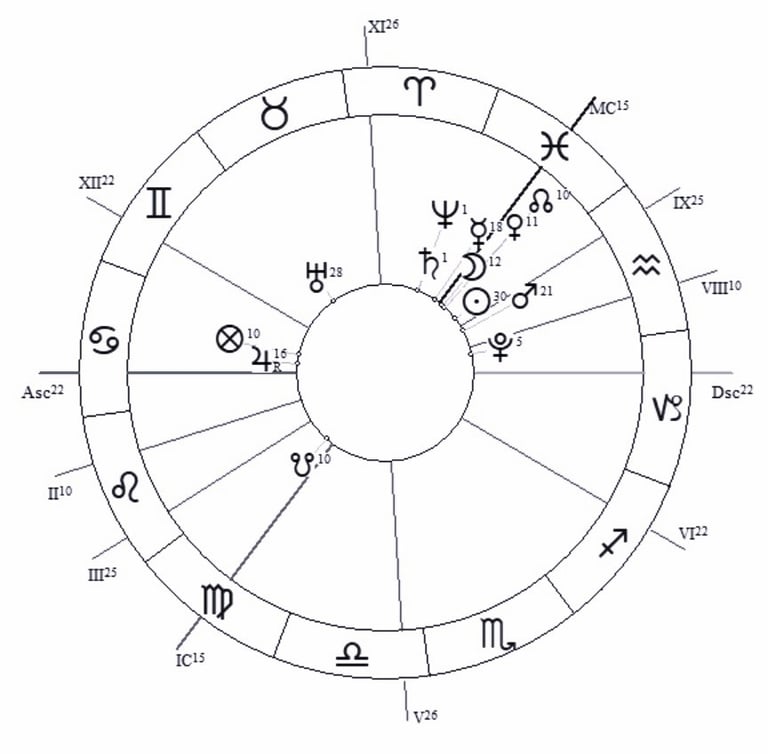
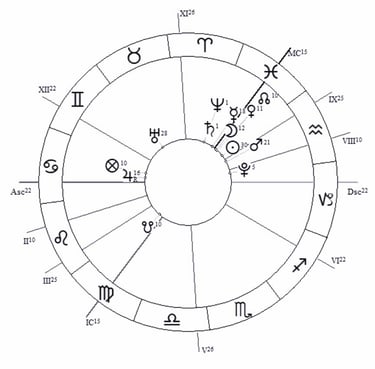
18.02.2026 13:33 (GMT +2), RIGA, LATVIA
Oh… we immediately have to refuse. Why? The chart is not radical! The hour ruler is Mercury, which does not match the ruler of the Ascendant (the Moon) and is not one of the triplicity planets of the sign on the cusp (Mars). Moreover, Mercury, being cold and dry by nature, does not correspond to the humoral nature of the Moon, which, being the ruler of the Ascendant, possesses a cold and moist nature. Here our modern-day ‘Ptolemies’ would stop, refusing the querent according to all the rules of good astrological tone. Well, we, as always, closed our eyes to this, considering this moment only for the present article and not even recalling it at the beginning of the work. Nor afterwards.
But even if our ossified traditionalists had overcome this impossibility and gone further, they would have taken only one step, with the same result. Why? Because ahead of them awaited one of the main significators — the ruler of the credit institution. Who is that? Saturn. And not just Saturn, but Saturn in fall. Oh no… This is a very-very-very bad Saturn! Simply the chief villain among all villains! Here they would recall Lilly’s words that one should not undertake the consideration of questions where he is the main significator, because such questions do not portend a good outcome. Therefore, even if they had the courage to overcome the fact that it is Saturn, they would immediately have to say no, answering the querent’s question. Because the rules advise it! Unfavorable outcome! We closed our eyes to this moment as well. For now let us leave it aside and go further.
Perhaps, if among our bookish friends there had been someone desperate who tried to surpass his own limitations, similar to Uranus of our dear fluffies, he would again have come to the same conclusion. Why? Alas, the querent’s planet does not behold the quesited’s planet; an aspect between them is impossible. And as we — horary astrologers — know, if there is no aspect, there is no event. Period. Turn to another credit institution! A clear answer to a specific question. True, erroneous… but that’s a trifle. In the end, the question chart initially said that it was better not to undertake its consideration. We hear the echo of radicality somewhere in the distance.
Fortunately, we ignored all the above, completely and entirely surrendering to context — the only key in which everything should be considered in any question. And what did we see?
The fact that Saturn represents the credit institution plays no significant role from the position of — oh, what a villain! Nor does it matter that there will be no aspect between the querent, represented by the Moon, and Saturn. Nor that the Sun, being the ruler of the querent’s wallet, will not make an aspect with Saturn because it is about to change sign, where it will also not behold it, nor will the Moon. Also, the fact that Saturn is conjunct Neptune — this earth-shaker — plays no role whatsoever. None of this matters at all. Then what does?
The essence of the querent’s question — context, in other words — lies in whether they will increase his credit limit? How the credit institution will respond to the querent’s request to give him more money. And the fact that Saturn is in fall — must be ignored. More important is what reception Saturn has toward the querent or, more importantly, toward his wallet? How does Saturn relate to the Sun?
We cannot be in two places at once. We cannot say that Saturn is in fall and at the same time exalts, or elevates, the Sun — the querent’s wallet. What is more important to us? Dignity or reception? Attitude or quality? If the querent were asking us how good the credit institution he intends to apply to is, we would ignore Saturn’s reception to the Sun and focus on Saturn’s essential dignity — fall. But this plays no role in the present question. And since fall and exaltation are at opposite poles, we must make a choice. Saturn’s fall? Or the Sun’s exaltation? In our case — attitude is primary. And therefore we ignore the fall, as this is what happens automatically to Saturn in Aries with the exaltation — he will always be in fall when in the place of the Sun’s exaltation. This is precisely the moment when common sense must stand above book rules. In other words, when an astrologer must think, not simply blindly follow.
Of course, Saturn throughout the entire sign will remain in the place of the Sun’s exaltation, and therefore this cannot be the only argument, if not for one but! Namely — Saturn has just changed from Pisces to Aries. The querent is asking us what will happen if he applies to the credit company to increase his credit limit. And Saturn symbolically shows us what will happen — as if he has entered a place where he elevates, or increases, the querent’s money. It is precisely in this connection that the exaltation of the Sun in Aries is more important to us than its diurnal triplicity. We see the event through the change of sign and, as a consequence, the change of reception. If the querent applies — his limit will be increased. Without any aspect.
And what about the Moon's aspect to Jupiter, you might ask? With mutual reception, moreover. It only confirms what has been said. If the querent knew for certain that the limit would be increased and wanted to know exactly when it would happen, then the aspect between the Moon and Jupiter would be primary. In that case, Saturn's ingress would play no role at all. Everything depends on context. Furthermore, the credit company is the party with whom we enter into an agreement, and therefore it is represented by the seventh house, not the tenth. But if the querent were applying for a loan from the state — for example, from European funds for certain business support — then in that case the tenth house would be the house of the quesited, not the seventh. Context everywhere. Common sense everywhere. This is what constitutes the art.
And what happened in the end? Exactly what we described above. He applied, and the limit was increased to the desired amount literally the next day.
As you can see, the logic of considering question charts does not always fit into book postulates. For the simple reason that we must follow the thread of context, not the letter of books. And this is a great art that always challenges the Wild West so wild in its ignorance. The Wild, Wild West…
LISSIE, 'WILD WEST'

Subscribe to our blog

Astrological Centre Septener | Horary Astrology
"...In they Study, be Totus in Illis that thou maist be Singulus in Art; be not extravagant or desrious to learn every Science, be not Aliquid in Omnibus."
Copyright © SEPTENER, 2016-2026
ABOUT




William Lilly
Astrological Centre Septener was founded in 2016.
Our Centre applies the methods of Horary Astrology for accurate prediction and analysis of events.
Our mission is not only to provide consultations to other people, but also to revive interest in the Real Astrology.
IK SEPTENER
Latvia, Riga
+371 20136077
info@septener.com
Reg. No: 40002178384