
WHEN THE STARS GOVERN FOOLISHNESS
On the Influence of the Stars over Man.
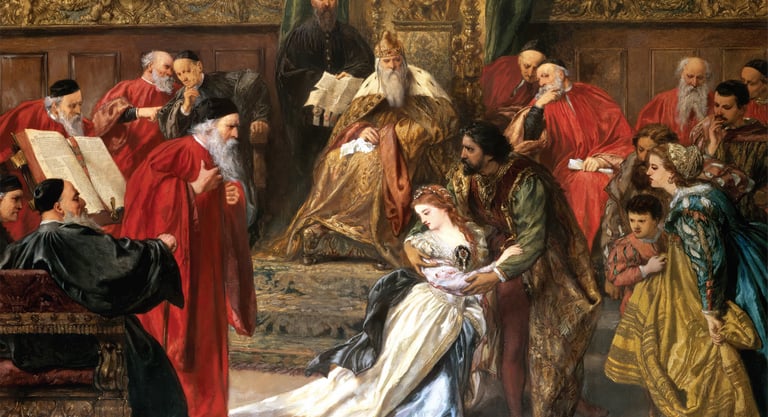

When the Stars Governs Foolishness
Traditional astrology draws heavily upon a worldview shaped in the Renaissance and the Middle Ages. Belief in fate and the power of the stars was widespread — at least in Western Europe, and especially in England and Italy. Religion did not contradict it, and even the emerging materialist science of the sixteenth century, guided by the hand of Francis Bacon, could not overshadow these long-established views. Nevertheless, despite the widespread conviction in the inevitability of fate — or Fortune — that ruled the sublunary world, it was never considered insurmountable. Reason and virtue, it was believed, could overcome the inevitable evil that was the consequence of the Fall, as people of the Elizabethan age held. Only a fool or an ignoramus would seek justification for his own evil and foolishness in the stars. Shakespeare’s genius expressed this with remarkable precision in his famous tragedy King Lear, through the words of Edmund:
"This is the excellent foppery of the world, that when we are sick in fortune — often the surfeit of our own behaviour — we make guilty of our disasters the sun, the moon, and the stars; as if we were villains by necessity, fools by heavenly compulsion, knaves, thieves, and treachers by spherical predominance, drunkards, liars, and adulterers by an enforced obedience of planetary influence; and all that we are evil in, by a divine thrusting on. An admirable evasion of whoremaster man, to lay his goatish disposition to the charge of a star!"
If astrologers studied that era a little more deeply, they might understand astrology itself somewhat better. For our will is our own. But to the ignorant, it is nothing more than a blind instrument in the hands of the stars and planets.
Subscribe to our blog
Astrological Centre Septener | Horary Astrology
"...In they Study, be Totus in Illis that thou maist be Singulus in Art; be not extravagant or desrious to learn every Science, be not Aliquid in Omnibus."
Copyright © SEPTENER, 2016-2026
ABOUT




William Lilly
Astrological Centre Septener was founded in 2016.
Our Centre applies the methods of Horary Astrology for accurate prediction and analysis of events.
Our mission is not only to provide consultations to other people, but also to revive interest in the Real Astrology.
IK SEPTENER
Latvia, Riga
+371 20136077
info@septener.com
Reg. No: 40002178384